
Living Inside the Fire: A Long Journey with Small Fiber Neuropathy

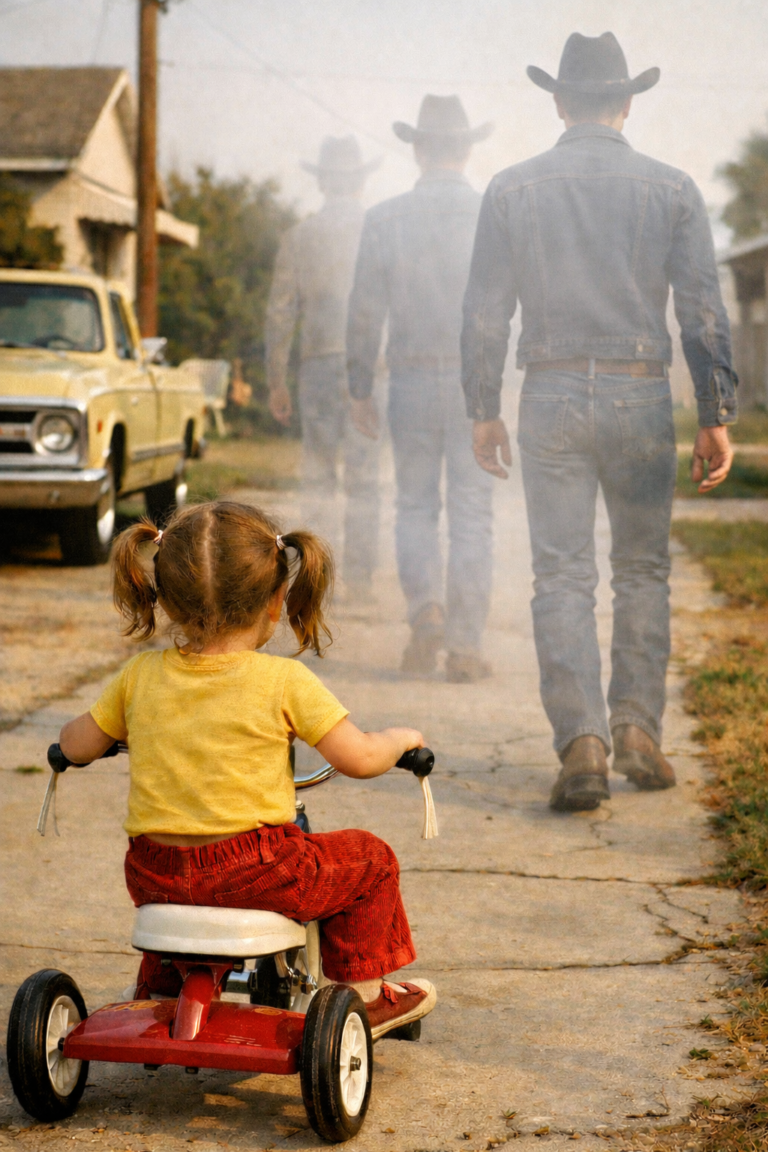
“An invisible fire beneath the skin—the moment everything changed, and I didn’t even know it.”
It did not begin all at once. It rarely does.
At first, it was subtle—so subtle it almost did not seem worth mentioning. A strange tingling in the feet. A faint buzzing, like static just beneath the skin. Maybe a little numbness. Easy to dismiss. Easy to explain away. Recovery from surgery, perhaps. A temporary side effect. Something that would pass.
But it didn’t pass.
Instead, it evolved.
What began as mild and ambiguous sensations slowly transformed into something far more intrusive, far more consuming. The tingling sharpened. The numbness deepened. Temperature began to disappear, heat and cold no longer registering the way they once had. And then came the pain.
Not ordinary pain.
This was pain that didn’t behave. Pain that did not follow rules. Pain that could not be explained in simple terms.
It felt like walking on rocks. On glass. On uneven ground that was not there. It felt like invisible objects lodged beneath the skin, pressing upward with every step. It felt like the ball of the foot was resting on something foreign—hard, jagged, immovable.
And then there was the sensation that defied even those descriptions: as if each toe were being tightly bound by an invisible string. Not loosely. Not gently. But tightly pulled to the point where it felt like circulation might be cut off entirely. A constant constriction. A tension that never released.
This was no longer something that could be ignored.
This was the beginning of a life lived with small fiber neuropathy.
The origin traced back clearly. A sequence of events that made sense when viewed in hindsight: kidney stone surgery, followed by infection, followed by treatment with ciprofloxacin. At the time, it was just part of the recovery process. A necessary step. A routine prescription.
But sometimes, what is routine for one system becomes catastrophic for another.
The neuropathy began shortly after. What started in the feet did not remain contained. Over time, the symptoms deepened, intensified, and layered upon one another. The body, once predictable, became uncertain terrain.
Years passed.
Not months. Not a short season of illness. Years.
Since 2022, this condition has not simply existed—it has persisted, adapted, and reshaped daily life in ways that are difficult to fully articulate to someone who has never experienced chronic neuropathic pain.
Because pain like this is not just physical.
It changes behavior.
It changes movement.
It changes identity.
Walking, once automatic, became something to think about. Then something to brace for. Then something to avoid when possible.
The body compensates in ways that are not always obvious at first. Subtle shifts in posture. Slight changes in gait. Adjustments made unconsciously to avoid triggering pain. But over time, those adjustments come at a cost.
The joints begin to absorb stress they were not designed to handle. Muscles weaken from disuse. Tendon tightens. Inflammation builds.
Eventually, new diagnoses appear.
Achilles tendonitis.
Osteoarthritis in the feet.
Not as isolated conditions, but as consequences of a body trying to navigate pain for too long without relief.
And this is where the questions begin to deepen.
Is this progression inevitable?
Is the neuropathy causing these changes directly? Or is it the way the body has had to adapt to survive it?
The answer is not always straightforward. Small fiber neuropathy itself does not destroy joints. It does not break down cartilage. But it does change how a person moves. And over time, altered movement patterns can lead to mechanical wear.
So the connection exists—but indirectly. Not as a single cause, but as part of a larger chain of adaptation and consequence.
Treatment becomes its own journey.
One medication after another.
Gabapentin. Pregabalin. Duloxetine. Nortriptyline. Low-dose naltrexone.
Each one offering the possibility of relief. Each one carrying its own set of side effects. Each one, ultimately, falling short of what is needed.
Topical treatments are introduced. Lidocaine, up to five percent. This, at least, offers something—relief from the hypersensitivity. The ability to lie in bed without the sheets causing pain. The ability to exist without constant irritation from the lightest touch.
It is not a cure. But it is something.
Capsaicin cream is tried. The burning it produces is intense—not damaging to the skin, but overwhelming to the senses. Not a viable option.
Supplements are added. Alpha-lipoic acid. Acetyl-L-carnitine. B vitamins. Vitamin D. Omega-3s. Probiotics. Each one representing hope. Each one part of a broader effort to support the body in any way possible.
Then comes a more invasive step: spinal cord stimulation.
A procedure that carries weight. Not just physically, but emotionally. It represents escalation. It represents the acknowledgment that first-line treatments have failed.
Three months later, the results are disappointing.
Little to no meaningful relief.
And that kind of outcome doesn’t just affect the body. It affects belief. It challenges the idea that something out there will finally work.
Pain management continues.
Oxycodone, taken regularly. Not as a solution, but as a tool. A way to blunt the intensity, even if only partially. A way to make the pain more tolerable, even if it never fully disappears.
A new medication is added—topiramate. Another attempt. Another possibility.
And still, the underlying question remains:
Is there an endpoint to this?
What does life look like long-term with small fiber neuropathy?
Does it continue to progress indefinitely?
Does it take away the ability to walk?
Does it ever truly get better?
The answers are not absolute.
Small fiber neuropathy does not typically cause paralysis. It does not directly impair the muscles responsible for movement. But pain can be just as limiting as weakness. When every step feels like walking on glass, mobility becomes a choice weighed against suffering.
Some people stabilize. Some plateau. Some improve. Some continue to experience gradual progression.
There is no single trajectory.
And that uncertainty is one of the hardest parts.
Beyond the physical symptoms, there is another layer—one that often goes unspoken.
Isolation.
Depression.
Reduced activity.
Loss of strength.
A shrinking world.
These are not separate from the condition. They are part of it. Not because the condition directly causes them, but because living in constant pain changes how a person interacts with life.
Time once spent moving freely becomes time spent sitting or lying down. Activities once enjoyed become difficult or impossible. Social connections can fade when participation becomes inconsistent or exhausting.
This is not weakness.
It is adaptation.
But adaptation, over time, can come at a cost.
And yet, even within all of this, there are still paths forward.
Not easy ones. Not guaranteed ones. But options that have not yet been fully explored.
A neuromuscular specialist—someone who focuses specifically on nerve disorders at a deeper level.
A full autoimmune evaluation—to determine whether there is an underlying immune component that could open the door to treatments like IVIG.
Formal autonomic testing—to assess the broader involvement of small fiber function.
A multidisciplinary pain approach—one that looks beyond medication alone.
Advanced therapies, such as high-concentration capsaicin patches administered in controlled settings.
Physical therapy is designed not to push through pain, but to work alongside it—rebuilding strength, improving mechanics, reducing long-term joint stress.
Gait analysis. Orthotics. Small adjustments that, over time, can reduce cumulative damage.
None of these are instant solutions.
But together, they represent a shift—from managing symptoms in isolation to addressing the condition as a system.
After more than two decades, the question is no longer just “How do I stop this?”
It becomes:
“How do I live with this in a way that preserves as much function, independence, and quality of life as possible?”
That is not giving up.
That is strategy.
Because even after all this time, one thing remains true:
This condition may shape the experience of life—but it does not define itself entirely.
And even in the presence of constant pain, there is still room to build something forward.
Not perfectly.
Not easily.
But intentionally.
If parts of this story felt familiar to you, you’re not alone. Living with something unseen can change not just how we feel, but how we move through the world.
If you’re living through something like this and have a story of your own to tell—and if you would like to share it,
Thank you for being here and taking the time to step into this experience with me.
— Brandee Tidwell
Living Inside the Fire: A Long Journey with Small Fiber Neuropathy